
Insurance Claims · 7 min read
Filing a hail claim is not automatically the right move, and neither is avoiding one. It is a decision with four inputs: how bad the damage is, what your deductible is, what the vehicle is worth to you, and how you feel about the claim on your record.
Work through those in order and the answer usually becomes obvious.
Question 1: how much damage is actually there?
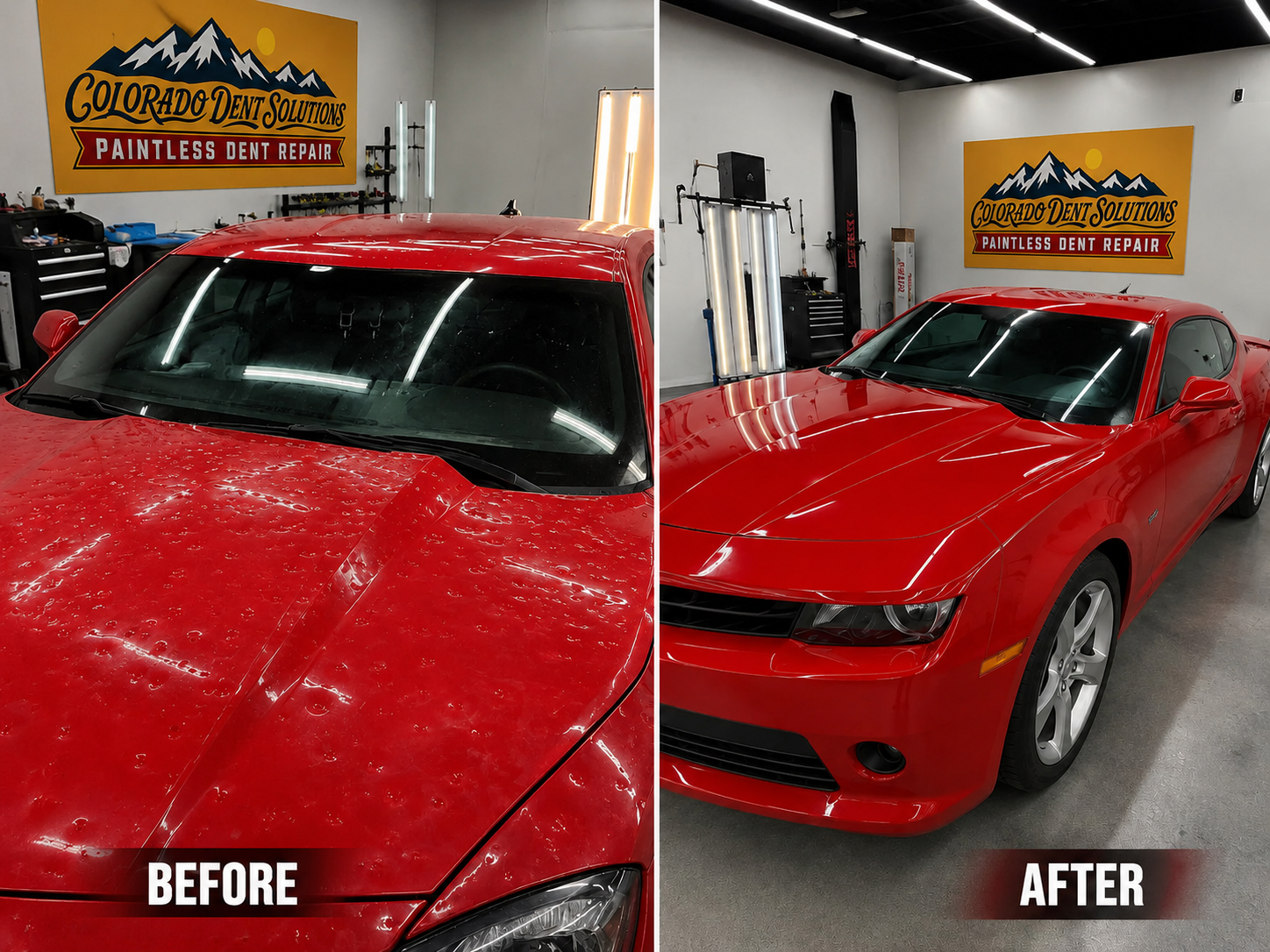
Start here, because everything else depends on it. Light hail on a hood is a different conversation from 300 dents across every horizontal panel plus the upper doors. Most people underestimate hail damage on a first look, because it hides in flat light.
Get an assessment before you decide. A shop reading the panels under proper light will tell you how many panels are affected and how heavy the damage is, which is exactly the information the decision needs.
Question 2: what is your deductible?
Find the comprehensive deductible on your declarations page. Then compare it against the assessed repair.
- If the repair is well above the deductible, filing usually makes financial sense.
- If the repair is close to or below the deductible, a claim may produce no payment at all.
- If you are between the two, ask about the repair scope, since a supplement can change the number once panels are examined properly.
Question 3: what is the vehicle worth to you?
A newer or leased vehicle usually justifies repair regardless, because unrepaired hail is noted at return or trade-in. An older vehicle you intend to keep for years may be a different calculation, particularly if the damage is cosmetic and the paint is unbroken.
Consider also that very heavy hail on a lower-value vehicle can lead a carrier to declare a total loss, which is their decision and changes the picture entirely.
Question 4: how do you feel about the claim record?
Comprehensive claims are generally treated differently from at-fault claims, but rating rules belong to each carrier. If this is a concern, ask your agent directly before filing. Our guide on whether a hail claim raises rates in Colorado covers the right questions to ask.
If you decide not to file
Paying directly is a legitimate choice, particularly with light damage and a high deductible. Paintless dent repair on one or two panels is often far more affordable than people expect, because hail is priced by panel rather than by individual dent.
Ask for a direct-pay quote alongside the assessment so you can compare both routes with real numbers rather than assumptions.
If you decide to file
Report the damage to your carrier, keep your photographs, and choose your own repair shop. Book the repair early, since storm-season scheduling across the metro fills quickly. Our claim support page describes how we work alongside the process, and the insurance help hub has guides for the major carriers.