
Insurance Claims · 7 min read
Every hail season, Colorado drivers see the same promise on flyers and yard signs: zero out of pocket, guaranteed. It is worth being careful with that language, because what a driver ends up paying is not something a repair shop controls.
Some customers do end up paying little or nothing. Whether that applies to you depends on your repair, your policy, your deductible, the terms of any assistance or program you qualify for, and decisions your insurance company makes. Here is how those pieces fit together.
Where the out-of-pocket number comes from
On a covered comprehensive hail claim, the insurer pays the approved repair amount minus your deductible. The deductible is the part that lands on you. So the question 'what will I pay' is mostly the question 'what is my deductible and does anything offset it'.
Three variables move the number:
- The size of the approved repair relative to your deductible
- Your specific policy terms, including any hail or wind-related provisions
- Whether you qualify for any assistance or program the shop can lawfully offer, under its stated terms
Why guarantees are a red flag
A shop cannot know your policy before reading it, cannot decide your coverage, and cannot promise how your carrier will handle an estimate. Anyone promising a specific out-of-pocket outcome before assessing the vehicle and reviewing your situation is promising something outside their control.
What a good shop can do is be transparent: assess the damage properly, explain what the repair involves, and be clear about what any assistance does and does not cover.
What Colorado Dent Solutions can tell you
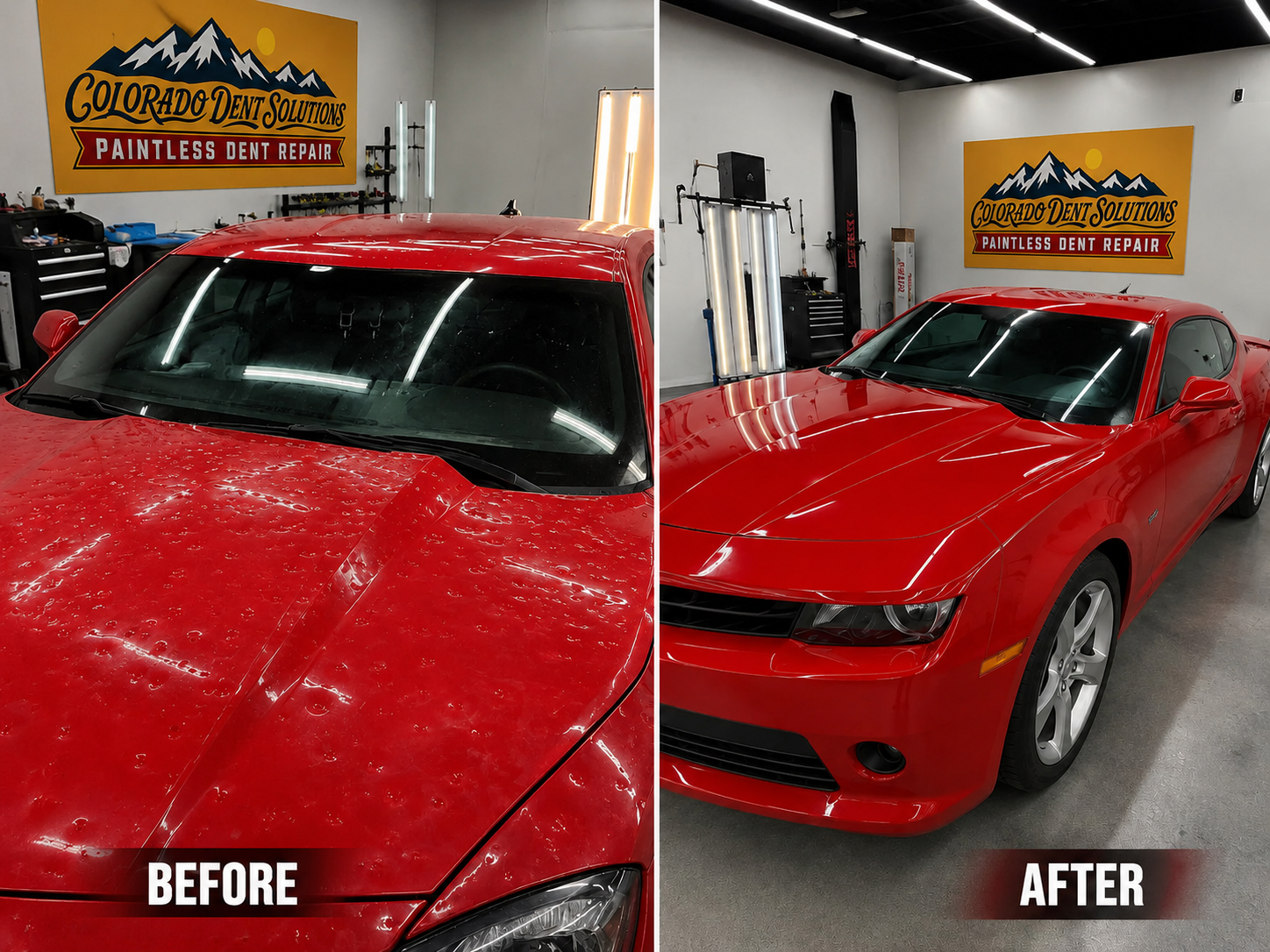
We can assess the damage honestly and explain what paintless dent repair will achieve on your panels. We can document the damage clearly for your claim, and we can explain any current assistance we offer, including its conditions, in plain terms before you commit to anything.
We cannot promise that your repair will cost you nothing, and we will not imply that we are affiliated with, endorsed by or acting for your insurance company. We are not.
When drivers do end up paying little
It usually comes down to one of these situations:
- A low comprehensive deductible on a policy, with a repair total well above it
- Policy terms that treat certain weather losses differently, which some plans do
- Qualification for shop assistance under its published terms, where applicable
And when drivers pay more than they expected, it is normally a high deductible combined with lighter damage than they assumed. That scenario is covered in what happens if hail damage costs less than your deductible.
How to find out where you stand
- Locate your comprehensive deductible on your declarations page.
- Get the damage assessed so you know what the repair actually involves.
- Ask us directly what assistance may apply and on what terms.
- Speak to your insurer about coverage, since that decision is theirs alone.
Start with a free hail assessment. You will get honest information about the vehicle, which is the part we can actually control.