Hail Damage · 8 min read
Colorado hail is fast and local. One neighbourhood gets hit hard while the next stays dry. If your vehicle was caught out, the first day or two set up everything that follows: how well the damage is documented, whether a claim makes sense, and how quickly you get a repair slot before the whole metro books out.
Here is the order we recommend to customers.
Step 1: inspect properly, not casually
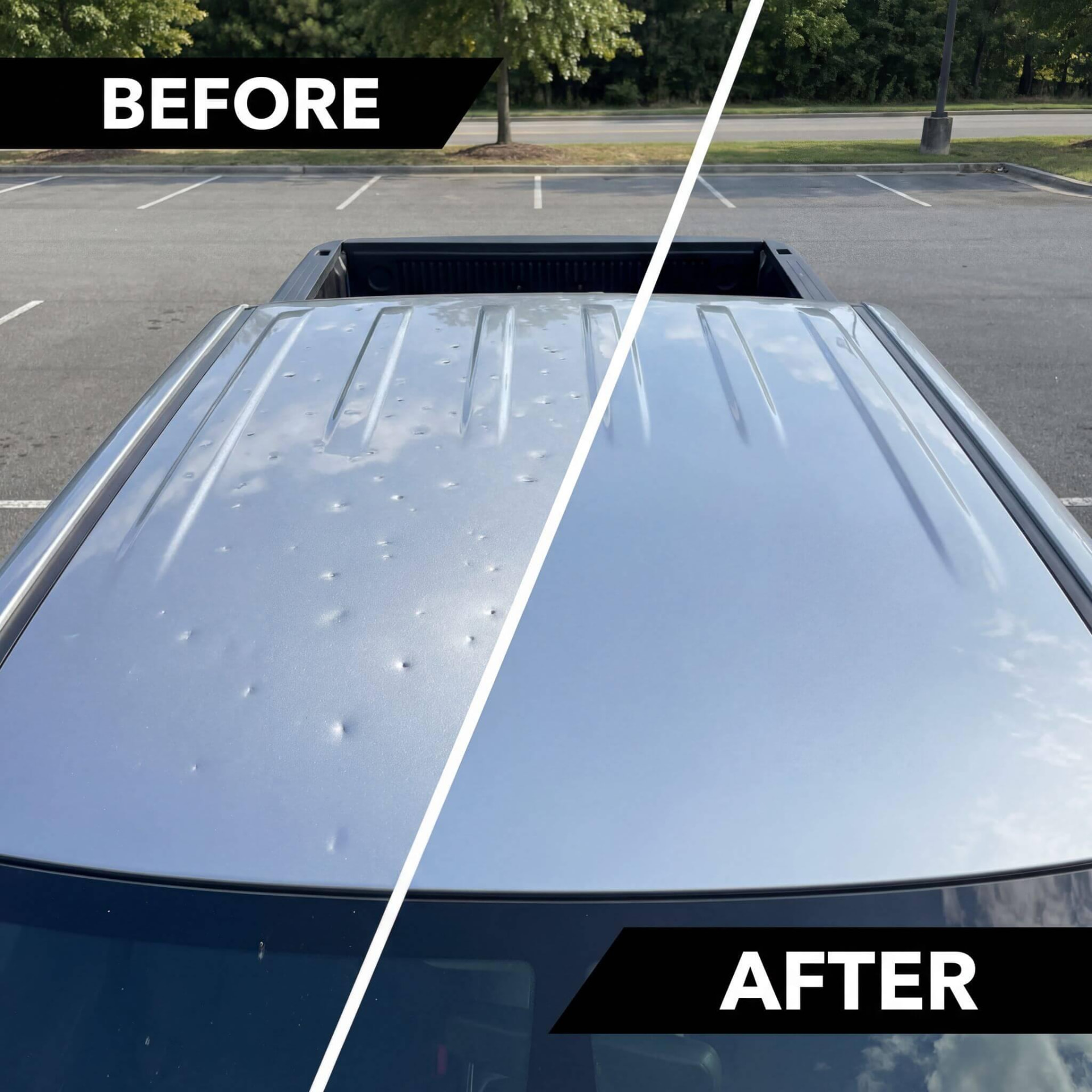
Hail damage hides. In flat overhead light a dented roof can look fine. Move the vehicle into open daylight and look along each panel from a low angle so light runs across the surface rather than into it. Check the horizontal panels first, because they take the worst of it: roof, hood, trunk lid or tailgate. Then check the upper edges of doors, fenders, quarter panels and mirror caps.
Also look at glass, lights and trim. Cracked glass or broken lamp lenses change the scope of the repair and should be noted early.
Step 2: document while it is fresh
- Photograph every affected panel from a low angle in daylight.
- Take one wide shot of the whole vehicle from each corner.
- Note the date the storm hit and where the vehicle was parked.
- Keep any receipts related to the event, such as temporary shelter or towing.
Good photographs are useful whether or not you file a claim, and they are far easier to take now than after weeks of dust and sun.
Step 3: get an independent assessment
Before you decide on a claim, it helps to know how bad the damage actually is. A PDR assessment tells you which panels are affected, roughly how heavy the damage is, and whether paintless repair is appropriate. That is different information from a coverage decision, and it puts you in a stronger position when you speak to your insurer.
Send your photographs through our free assessment form and we will come back with what we see.
Step 4: decide about a claim with real numbers
Once you know the scale of damage and your comprehensive deductible, the decision becomes practical rather than emotional. Light damage on a high deductible may be better handled directly. Moderate to heavy damage almost always warrants a claim.
Read should I file a hail claim in Colorado before you call, and whether a hail claim affects your rates if that is your concern.
Step 5: book before the metro fills up
After a significant storm every PDR shop across Denver, Aurora, Lakewood and the northern suburbs takes on weeks of work at once. Scheduling early does not commit you to anything, and it protects your place in the queue while the claim runs in parallel.
If losing the car for several days is a problem, ask about vehicle pickup and return, and about rental car assistance, when you book.
What not to do
- Do not sign anything with a door-knocking storm crew before you have understood the damage. Colorado sees a wave of out-of-state operators after every major hail event.
- Do not agree to a repair method before someone has actually looked at your paint.
- Do not delay for months and then try to claim. Later inspections make it harder to tie damage to a specific storm.
- Do not assume a spotless-looking car is undamaged. Check it in daylight at a low angle.
We are a local shop in north Denver, not a travelling storm operation. If you want an in-person look, our hail damage repair page explains how the process runs.