
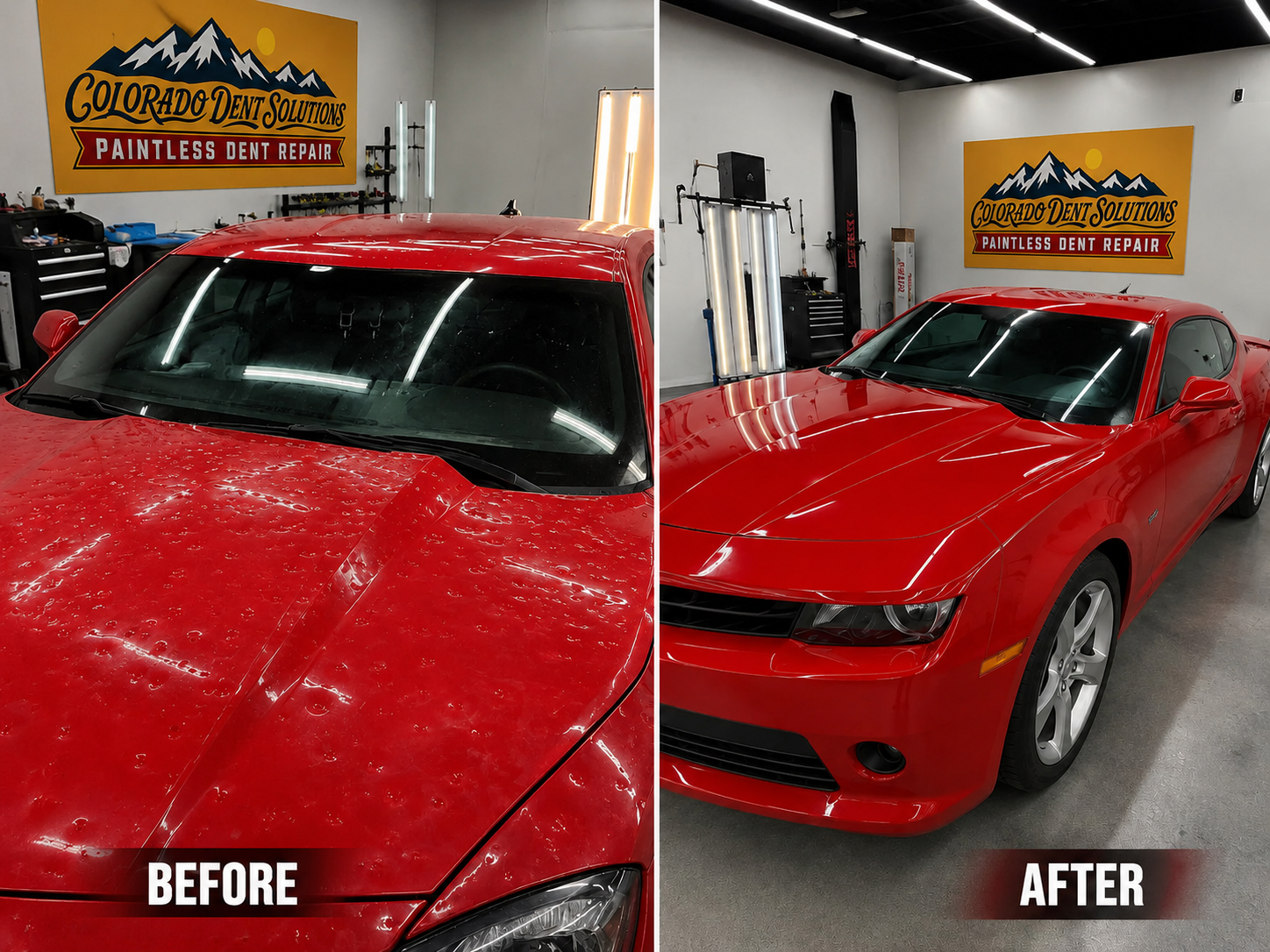
Hail Damage · 8 min read
Hail estimates confuse people because they look nothing like a normal repair quote. There is no single line saying 'fix the dents'. Instead there is a breakdown by panel, and within each panel a count and a size band.
Once you understand that structure, both a shop quote and an insurance estimate become readable.
How a hail estimate is built
Every horizontal and upper panel is assessed separately: hood, roof, trunk lid or tailgate, each fender, each door, quarter panels, and often the roof rails and mirror caps. For each one, the assessment records roughly how many dents there are and which size band they fall into.
That grid of panel, count and size produces the labour figure. Additional lines cover access work, any parts that need removal, and anything that paintless repair cannot address.
The factors that move the number
- Number of panels affected. The biggest single driver.
- Dent count per panel. Dense damage takes longer than scattered damage.
- Dent size. Larger dents move more metal and take more passes.
- Panel material. Aluminium hoods and tailgates take longer than steel.
- Access. Roofs often require headliner work. Some panels are heavily braced.
- Vehicle size. A large truck has considerably more surface area than a compact sedan.
Why some hail damage cannot be done with PDR
Paintless repair needs intact paint. Where hail has cracked or chipped the finish, or where an impact has torn metal, those areas need conventional repair. Broken glass, damaged lamp lenses and cracked plastic trim are separate items entirely.
A thorough assessment separates what PDR handles from what does not, so you are not surprised halfway through.
Claim estimates versus direct-pay quotes
If you are claiming, the carrier writes an estimate and may approve supplements once panels are examined more closely. If you are paying directly, the quote can be scoped to the panels you care about rather than the whole vehicle, which often lowers the number substantially.
Both routes are covered in more detail in should I file a hail claim and what happens if damage is under your deductible.
Getting a real Denver number for your vehicle
Photographs work well for hail if they are taken correctly. Stand at a low angle in daylight and shoot along each panel so the light runs across the surface. Include the roof if you can safely photograph it, since it is often the worst-hit panel and the one people forget.
Send them through the free assessment form with your year, make and model. If it is easier, ask about vehicle pickup and return from anywhere in the metro.
A note on storm-chasing operations
After large Front Range storms, temporary operations set up across the metro with aggressive pricing and short timelines. Some do good work. The practical issue is what happens if something needs revisiting after they have left the state. A local shop is accountable in a way a travelling crew is not.