
PDR Guides · 8 min read
Almost every call to the shop starts the same way: someone describes a dent over the phone and asks what it will cost. It is a fair question, and it is also the one question no honest paintless dent repair shop in Denver can answer accurately without seeing the damage. Price in PDR is not set by a menu. It is set by how much controlled metal movement the repair takes and how hard the back of the panel is to reach.
This guide explains what a technician is measuring when they quote your vehicle, why estimates move up or down, and how to get a realistic number quickly without driving across the metro.
What paintless dent repair pricing is actually based on
Paintless dent repair removes a dent by working the metal back to its original shape from behind, or by carefully lifting it from the surface with glue tabs. There is no filler, no sanding and no repainting, so the labour is the product. Five things drive that labour:
- Size and depth. A shallow dent the width of a coin behaves very differently from a dent the width of your hand. Depth matters more than width, because deeper metal has been stretched further.
- Location on the panel. A dent in the middle of a flat door is the friendliest case. A dent on a body line, on an edge, or near a panel seam is stiffer metal and takes longer.
- Access behind the panel. Some panels open up with a trim removal. Others are braced, glued, doubled or blocked by wiring and speakers. Access is often the single biggest cost factor.
- Paint condition. Paint has to flex with the metal. Original factory paint in good condition flexes well. Cracked paint, previous body filler or an older repaint changes the plan.
- Quantity. One dent is priced as one repair. Twenty hail dents on a hood are priced as a panel, which is usually much cheaper per dent.
Why a small dent is sometimes more expensive than a bigger one
This surprises people. A large, soft, round dent in the centre of a door can be a straightforward repair, because the metal moved evenly and the technician has room to work. A small, sharp dent right on the crease of a fender can be slower, because the crease is a structural stiffener. Working it takes many small pushes rather than a few big ones.
The same applies to aluminium panels, which many trucks and newer SUVs use for hoods and tailgates. Aluminium holds its shape and does not want to return the way steel does, so it needs heat cycles and patience.
Things that add time
- Dents on the edge of a panel where the metal is folded and welded
- Damage over an internal brace or a bonded reinforcement
- Dents that need trim, glass, headliner or interior panel removal for access
- Sharp impact points where the metal is stretched rather than simply pushed in
Single dents versus hail damage
Hail is priced differently. Instead of counting labour per dent, hail work is estimated by panel: how many panels are affected, roughly how many dents are on each, and how big those dents are. That is also the way most insurance estimates are written, which is why a hail estimate looks nothing like a door ding quote.
If your vehicle was caught in a Front Range storm, the more useful starting point is our hail damage repair page, and if you are weighing a claim, our insurance claim support page covers how the process usually runs.
When PDR is not the cheaper route
Paintless dent repair is usually the lower-cost option because it skips paint, materials and refinish time. But it is not always the right call. If the paint is cracked or chipped in the damaged area, the panel will need refinishing regardless, and a conventional body repair may make more sense. Same story if the metal is torn, if there is previous filler under the paint, or if a plastic bumper cover is creased rather than dented.
We will tell you when that is the case. Sending someone to a body shop is a better outcome than selling them a repair that will not hold up. For a side-by-side comparison, read paintless dent repair versus a body shop.
How to get an accurate Denver PDR price quickly
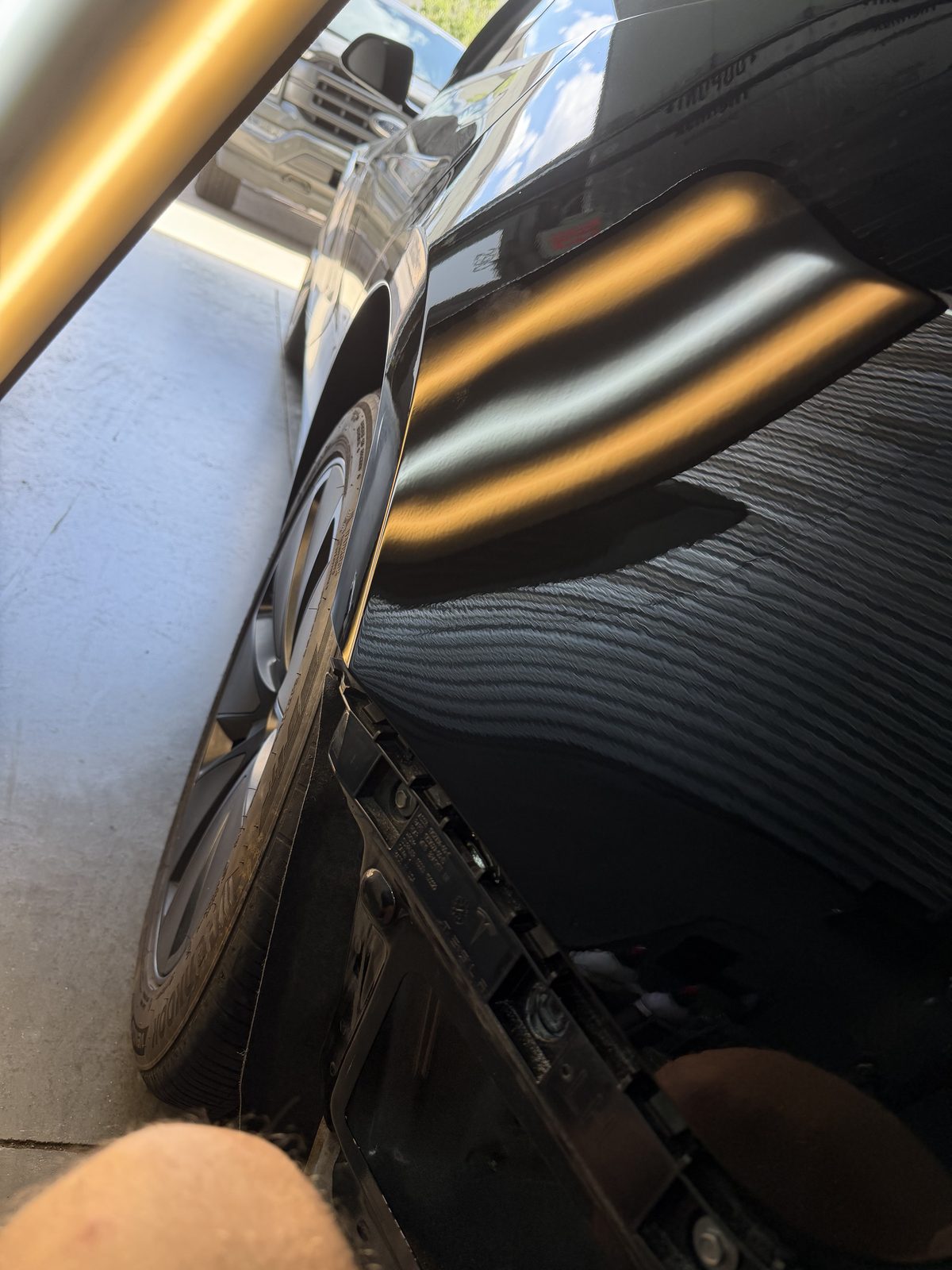
Photographs are the fastest path to a real number. What matters is not resolution, it is angle. Take the pictures outdoors, stand at a low angle to the panel so the reflection runs through the dent, and include one wider shot so we can see where on the vehicle the damage sits.
- One low-angle photo with a straight reflection line running across the dent
- One straight-on photo close enough to see the paint surface
- One full-panel photo showing the location on the car
- Your year, make and model
Send those through the free estimate form and you get a realistic range, not a guess. If the dent is unusual, we will say so rather than quote blind.
What is included in the price
A quoted paintless dent repair covers the assessment, the access work needed to reach the panel, the repair itself and reassembly of anything removed. Because there is no paint stage, there is no colour matching, no blending into adjacent panels and no cure time. Your original factory finish stays on the car.
If you are outside central Denver, ask about vehicle pickup and return when you request your estimate. It is part of how we work with drivers across the metro rather than an upsell.