PDR Guides · 8 min read
Two shops can look at the same dent and recommend two different repairs, and both can be right. Paintless dent repair and conventional body repair solve different problems. PDR restores the shape of a panel that still has healthy paint. A body shop rebuilds a surface when the paint or the metal itself has failed.
Knowing which one your vehicle needs saves you a wasted trip and, more often, saves you money.
The paint test comes first
Run a fingernail lightly across the damage. If the paint is smooth and unbroken, and the dent simply changes the shape of the reflection, paintless dent repair is on the table. If you feel a chip, a crack, a scrape down to primer or bare metal, the panel is going to need refinishing whatever else happens.
This is the single most useful check a driver can do at home, and it is the first thing a technician looks at. Paint is a flexible film. It will follow the metal back into place if it is intact. It cannot be un-cracked.
What paintless dent repair handles well
- Door dings from parking lots and garages
- Hail dents across hoods, roofs and trunk lids
- Shopping cart hits on doors and quarter panels
- Shallow creases along body lines, depending on depth
- Larger soft dents where the metal is displaced but not torn
Because the factory finish is never disturbed, there is no colour match to worry about, no blending into neighbouring panels and no repaint on the vehicle's history. That matters for resale and for lease returns.
What genuinely needs a body shop
- Cracked, chipped or missing paint in the damaged area
- Torn or split metal, or a hole
- Panels with previous filler under the surface
- Collision damage that has moved structure or affected panel gaps
- Plastic bumper covers with deep creases or splits
Sending a car for conventional repair is not a failure of PDR. It is the correct answer when the surface has to be rebuilt. We would rather refer a customer out than deliver a repair that will not hold up in Colorado sun and winter salt.
Cost, time and vehicle value
The practical differences usually come down to three things.
Cost
PDR skips materials, paint and refinish labour, so it is normally the lower-cost route for the same visible result.
Time
Many single-dent PDR jobs are same-day. Body work involves prep, paint and cure time, which is why a repaint is measured in days, not hours.
Value
Original factory paint is worth keeping. A repainted panel is disclosed on inspection and can be picked up by paint depth gauges at trade-in. If the panel can be saved without refinishing, it is generally worth saving.
The grey area: when a dent could go either way
Some damage sits on the line. A sharp crease with intact paint may be repairable to a very high standard, or it may end up 90 percent improved with a faint trace visible in direct sunlight. Deep dents on an edge, damage over a brace, and older vehicles with brittle repaint history all fall in this category.
The honest answer is to assess it and tell you the likely outcome before starting. We will describe what the panel will realistically look like, not what sounds best. If you want a second opinion on damage you have already been quoted on, send us photographs and we will tell you what we see.
How we decide in the shop
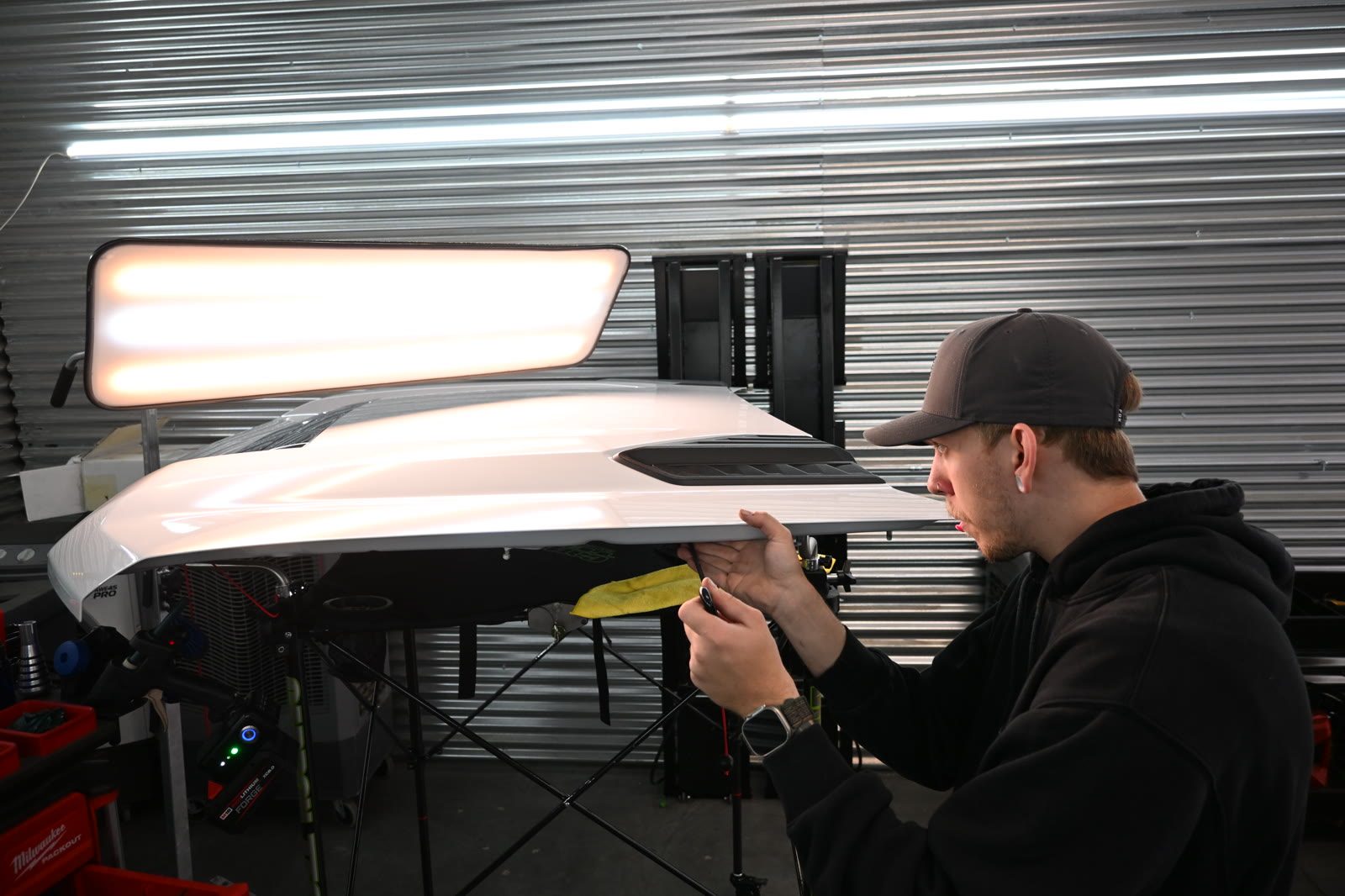
The assessment is quick and it follows the same order every time: check paint integrity, read the dent under a reflected line board, check the back of the panel for access, then look for signs of previous repair. Only after that do we talk about price and time.
If PDR is right for your vehicle, our Denver paintless dent repair page explains the service in detail. If the damage came from a storm, the hail damage repair page is the better place to start.