PDR Guides · 8 min read
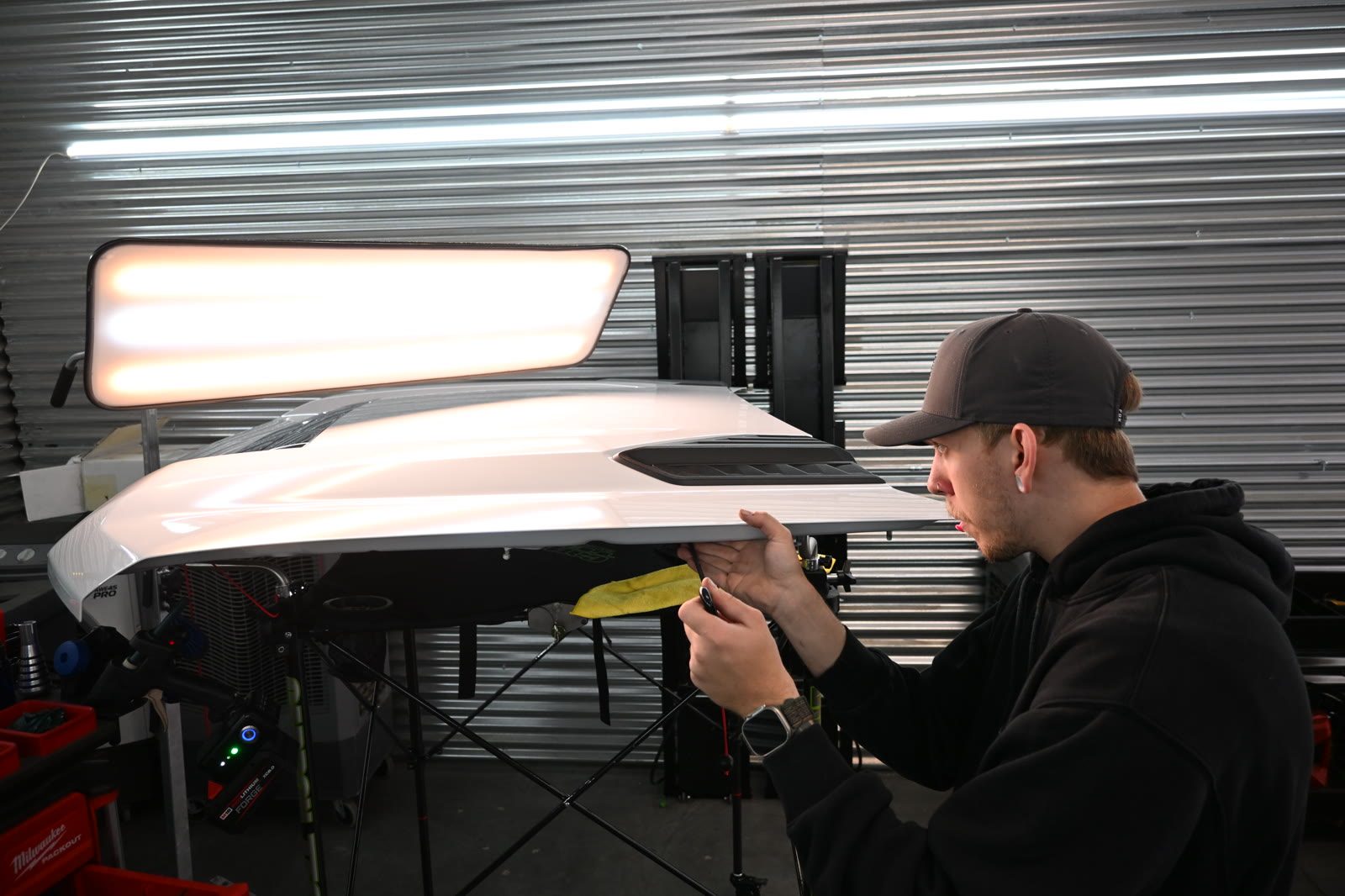
Paintless dent repair looks like a magic trick from the outside. A technician spends a while at the panel with a rod and a light board, and the dent is gone. There is no mystery to it. It is metalwork done in very small increments, guided by a reflection, and the skill is in reading the panel rather than forcing it.
Here is what the process actually involves on a typical Denver vehicle.
Step one: reading the dent
The panel is cleaned and a striped light board or reflected line is placed over the damage. A dent is invisible until light bends across it. The reflection turns a shallow depression into a clearly mapped shape, showing the centre of the impact, the high spots pushed up around it and how far the metal has stretched.
This stage decides everything else. A technician who does not read the panel properly ends up pushing the middle out and leaving a ring of raised metal around it, which is the classic sign of rushed work.
Step two: getting behind the panel
Most repairs are done from the back of the metal. That means creating access: removing an interior door card, a tail light, a wheel-arch liner, part of a headliner, or a trim panel. Some vehicles cooperate. Some hide the panel behind bracing, sound deadening and wiring.
Access work is careful and unglamorous, and it is a large share of the time on many jobs. Clips and fasteners are removed rather than forced, and everything goes back the way it came out.
Step three: moving the metal
With access established, the technician uses shaped rods and tips to push the low areas up in small, controlled increments, watching the reflection change with each push. Metal has memory. Guided correctly, it wants to return to where it was formed.
Where the panel cannot be reached from behind, glue pulling is used instead: a tab is bonded to the surface, pulled with a slide hammer or lifter, then released with a safe solvent. It is the same principle applied from the outside.
Knockdowns and high spots
Pushing metal up creates high spots that need tapping back down with a blending hammer and a knockdown tip. Alternating push and knockdown is how a panel is walked flat rather than bulged out.
Step four: finishing and inspection
The last 10 percent takes as long as the first 90. The panel is checked under different light angles, sometimes outdoors, because shop light and Colorado daylight show different things. Micro high spots are tapped, the surface is polished, and everything removed for access is reinstalled and tested.
You should be able to stand at a low angle in daylight and see a clean, unbroken reflection line running across the repaired area.
Why the paint survives
Automotive paint is a flexible layered film. When the metal is moved slowly and in small steps, the paint travels with it. Problems only appear when the paint has already been compromised, when a panel has filler under the surface, or when someone rushes the movement.
That is also why we check paint condition before quoting. More detail is in our guide on whether paintless dent repair affects factory paint.
What this means for your vehicle in Denver
Because nothing is refinished, there is no cure time and no colour matching. Many single-dent repairs are done the same day, and hail work is measured against how many panels are involved rather than paint booth availability. See how long PDR takes for realistic timelines, or send photographs and we will tell you what your panel needs.